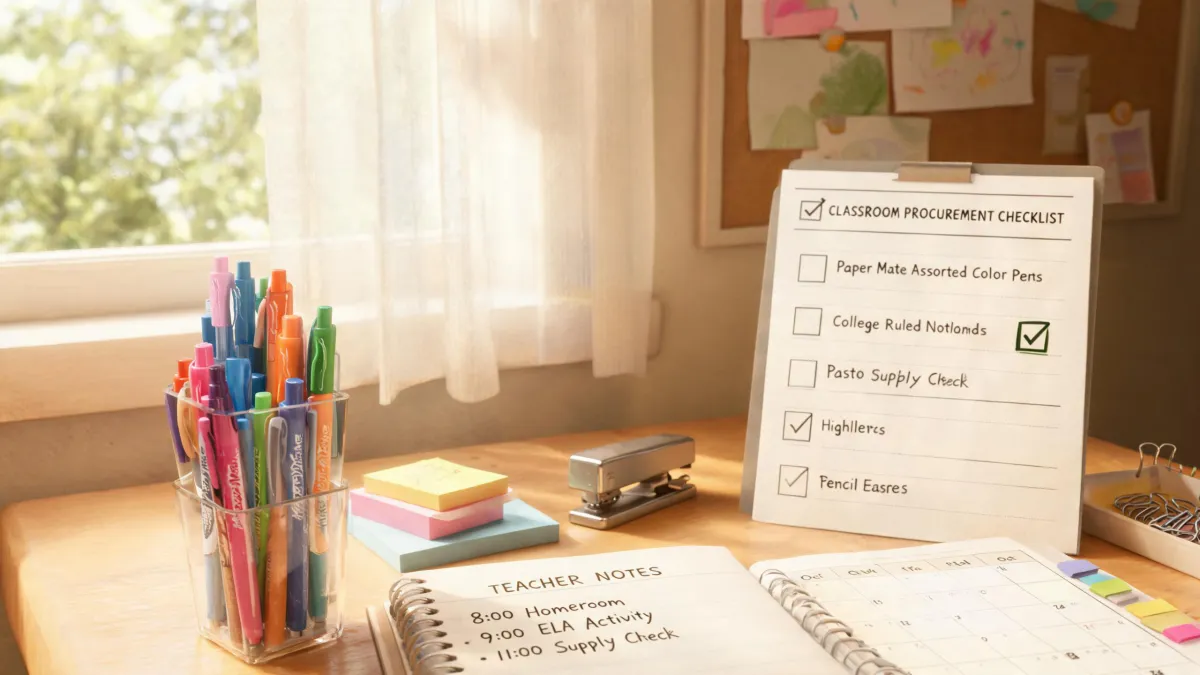
The Moment I Realized Cheap Pens Cost More
Back in 2022, I placed an order for 500 ballpoint pens. The price was unbeatable — $0.12 each. Two weeks later, my desk looked like a crime scene. Ink leaked onto three employee desks, two important documents were ruined, and the CEO asked me why our office supplies felt like a dollar-store bin.
That was the trigger event that changed how I think about pens. I didn't fully understand the cost of “cheap” until I saw the aftermath: re-ordering, reimbursing a stained blouse, and losing trust from the team. Now I approach every purchase — pens, calculators, even printers — with the same mindset: the lowest price is rarely the lowest total cost.
The Surface Problem: Why Employees Complain About Pens
You’ve probably heard it too: “This pen skips,” “The grip hurts after ten minutes,” “Why can’t we have the ones from the meeting room?” At first, I figured it was just picky people. But after hearing the same complaints from different departments, I started tracking what they actually wanted.
Here’s what I found: most employees don’t need a luxury pen. They need a reliable everyday writer that doesn’t bleed, doesn’t skip, and feels okay in the hand. That’s it. But when you buy strictly by price, you get pens that fail on all three counts.
The real issue? I wasn’t buying for the user.
I was buying for the budget spreadsheet. I treated pens like a commodity, not a tool. The deeper problem was that I didn’t understand the different writing styles people need. A data analyst wants a fine tip for spreadsheets. A creative lead likes a bold 1.4mm line for sketching ideas. An intern might prefer a gel pen because it feels smoother. Without that knowledge, every order was a gamble.
The Hidden Cost of Ignoring Pen Quality
Let me put some numbers on this. In 2023, I audited our office supply spend. We spent roughly $1,200 on pens annually. But I also tracked:
- ~30% of cheap pens were thrown away unused (bleeding, skipping, drying out)
- ~15 hours of employee time lost to complaints and re-ordering
- ~$200 of damaged documents from ink leaks
Add that up, and the “savings” from cheap pens actually cost us more than double the purchase price. And that doesn’t include the morale hit. When people can’t trust their tools, they feel undervalued.
I started thinking about this after a particularly frustrating week. Someone asked me for a GPA calculator for their college coursework, and another colleague wanted a water intake calculator. Those requests seemed trivial, but they reminded me that people rely on personalized tools. Why should pens be any different?
How I Turned Things Around: A Practical Approach
I didn’t overhaul everything overnight. I tested a few changes and tracked results over six months. Here’s what worked:
1. Switch to a shortlist of proven brands
Instead of buying whatever was on sale, I settled on three reliable lines that cover most needs:
- Paper Mate InkJoy Gel 1.0 — for smooth, vibrant writing. Employees who try these often request them again. The gel ink dries fast and feels premium.
- Paper Mate Profile Ball 1.4 — for bold strokes and signing documents. The wider point gives a confident line without smudging.
- A fine point retractable (like Paper Mate’s stick pens in 0.7mm) — for everyday note-taking and forms.
I keep a small stock of each and let department heads choose their preference before reordering. It took a bit of coordination, but now we have three distinct options instead of one-size-fits-none.
2. Apply the same logic to other office tools
Pens were just the start. When I updated our printer procurement, I remembered the lesson: don’t just look at the machine price. Factor in toner cost, reliability ratings, and service availability. Where to find a printer is a common question from new hires — I made sure we had a standard recommendation that avoided the cheap models with expensive cartridges.
And for calculators? We don’t buy generic ones anymore. If someone needs a specialized calculator (like a statistical model or a simple budget tool), I help them find a good online resource instead of buying a device that sits unused. That “GPA calculator” request? It led me to a free web tool that the whole college intern team uses. Saved us buying ten cheap calculators that would have been wrong for the job.
The Bottom Line: Education Beats Bargain Hunting
I used to think my job was to get the lowest price. Now I see it differently: my job is to understand what people actually need and deliver that efficiently. That means choosing products like Paper Mate that have a track record of quality, not just a low sticker price.
I’d rather spend 10 minutes explaining options than deal with mismatched expectations later. An informed customer — whether that’s an analyst, a creative director, or a college intern — asks better questions and makes faster decisions. And honestly, it makes my job more satisfying too. There’s something satisfying about seeing a desk with a pen that works perfectly, a printer that hasn’t jammed in months, and a team that doesn’t waste time complaining about supplies.
So next time you’re tempted by the $0.12 pen, ask yourself: what’s the real cost? You might find, like I did, that a slightly higher upfront price pays off in fewer complaints, less waste, and a happier office.