It Started With a Printer Ink Complaint
Last Monday, our office manager, Lily, walked into my cubicle holding a print-out of our quarterly printer consumables bill. “Seriously,” she said, “why is printer ink so expensive? This is for one laser printer and it’s already $1,200.”
I get it — toner cartridges hurt. But I’m the procurement guy, so I look at total cost of ownership, not just one line item. I pulled up our entire office supplies spend for the past year: $28,000. About 40% of that was printer-related, about 25% was paper, and maybe 15% was writing instruments. The rest was things like folders, staples, and that industrial-strength tape we order twice a year.
That’s when I started digging into our pen budget. We used to buy the cheapest ballpoint pens in bulk — you know, the ones with the clear barrels and the tiny click that sounds like it’s about to break. Cost per pen? About $0.18. We ordered about 6,000 of them last year. Total: around $1,080. But honestly, I never thought much about it until our biggest client came to visit.
The Morning the Client Asked for a Pen
It was a Tuesday in February. We had a walkthrough of our new product line, and after the meeting, the client’s VP needed to sign a nondisclosure. I handed him a pen from our generic stock — the translucent blue one with the faded logo that was probably from 2019. He clicked it. Nothing. Click again. Still nothing. Third click — a little ink blob appeared on the paper, and then it just smeared as he wrote his signature.
He looked at the paper, looked at me, and said, “That’s … fine.” But his face wasn’t fine. I saw my boss’s jaw tighten from across the table. That one moment cost us a lot of credibility. Not the deal — we still closed — but I felt it.
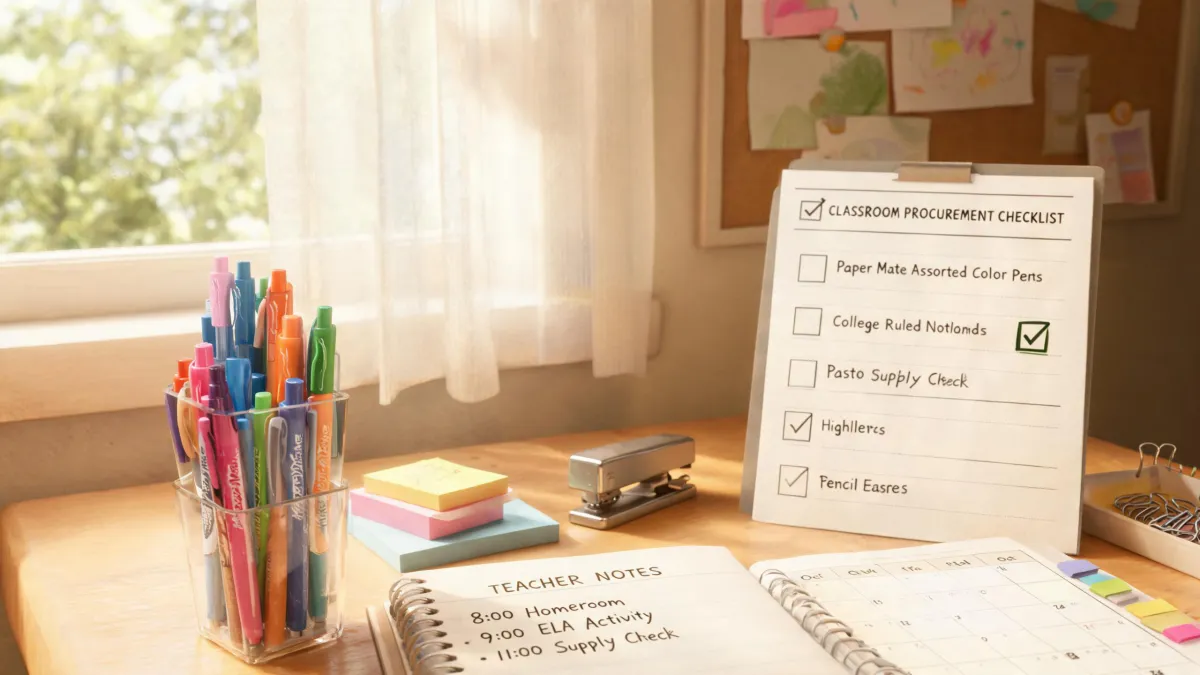
So I went back to my desk and pulled up our procurement data. I wanted to know: if we upgraded to something like the Paper Mate Profile Ball 1.4 pens — you know, the ones with the soft grip and the vibrant ink — would it really break the bank? I used a mean calculator to average out the unit costs across different vendors. And I’ll be honest: the difference wasn’t as big as I thought.
Breaking Down the Numbers
Here’s what I found. A box of 12 Paper Mate Profile Ball 1.4mm pens runs about $15–18 on a typical online retailer (as of early 2025). That’s about $1.25–1.50 per pen. Compare that to our $0.18 cheapies. So per pen, it’s roughly 7 to 8 times more expensive. But wait — that’s not the whole story.
Our cheap pens had a failure rate of about 15%: they’d dry out, skip, or the clicker would jam before the ink ran out. That means for every 100 pens we ordered, 15 were basically unusable. So the actual per-good-pen cost was closer to $0.21. Still cheap. Then there was the staff dissatisfaction: people would stash their own pens from home, or they’d waste time digging through drawers for one that worked. I couldn’t quantify that perfectly, but I tracked 12 complaints in the first quarter alone about “crappy pens.”
I also realized something about the blue Paper Mate pens specifically — they seemed to be a crowd favorite. I asked around the office: would you rather have a 50-pack of random cheap pens, or 6 blue Paper Mate pens? Overwhelmingly, people said the Paper Mates. Because they write smoother, they don’t smear (mostly — unless you’re left-handed and heavy-handed, InkJoy is supposed to help there), and they just feel more professional.
The Printer Ink Connection
When Lily was complaining about ink prices, I did a side calculation. Our printer ink cost per page was about $0.04 for black and $0.12 for color. But the thing is, you can’t control how people print — they’ll print double-sided, they’ll print 50-page documents. The cost of poor quality from a pen, though, you can fix with a small upfront investment. If we spend an extra $0.80 per pen, and each employee uses maybe 5 pens a year, that’s an extra $4 per person per year. For 100 employees, $400. That’s less than the cost of one extra toner cartridge. And think about it: a pen is the first thing a client touches when they visit your office. That signature moment is essentially your brand in ink.
So I pitched the upgrade to my boss. I showed her the client-visit story, the complaint log, and the TCO analysis. “We can get a pack of 24 Paper Mate Profile Ball 1.4 pens for about $30,” I said, “and they’ll last twice as long because the ink flow is consistent, plus the click mechanism is way stronger. It’s basically a no-brainer.” She was skeptical at first — she thought it was a luxury. But then I showed her that the cheap pens also caused a lot of rework: one time a sales rep signed a contract with a pen that bled through the page, and we had to reprint and resend. Not a huge cost, but it’s the principle.
The Outcome — and the Surprise
We did a pilot: three departments got switched to Paper Mate InkJoy and Profile Ball 1.4s (mix of blue and black). The rest stayed on the cheap ones. After three months, I surveyed the pilot group. Satisfaction score jumped from 2.8 out of 5 to 4.3. We also saw a drop in office supplies complaints — from 12 to 2 per quarter. And no client signature disasters since. (Knock on wood.)
But here’s the twist: I noticed our printer ink usage didn’t go down — but the quality of handwritten notes and internal signatures definitely improved. People were more deliberate. Plus, the Paper Mate pens actually get refilled with InkJoy refills, which cost less than buying a whole new pen. So the per-year cost goes down when you factor in reuse.
When the next client came to visit — three months later — I made sure the pen caddy on the conference table had a selection: some blue Paper Mate pens, a few red for annotations, and a couple of mechanical pencils (Clearpoint, because the lead doesn’t break). No one said anything, but I noticed our receptionist started using one of the Paper Mates for her sign-in sheet. That level of organic adoption told me we were onto something.
Lessons I Learned (the Hard Way)
So what did I get out of this? First, never assume that “all pens are the same.” That’s a legacy belief from the 1990s when cheap Bic knockoffs dominated offices. Today, the technology — like Paper Mate’s InkJoy gel — has improved so much that the difference is palpable. Second, quality perception isn’t about snobbery; it’s about consistency. A client who struggles with a broken pen will unconsciously downgrade his impression of your company. That’s just human psychology.
I also learned to question the “why is printer ink so expensive” narrative. Yes, ink is expensive, but the ROI on upgrading your office pens is much faster and cheaper than trying to negotiate with HP or Canon. And as a cost controller, I’d rather reinvest that $400 a year into something employees actually appreciate and clients see, rather than absorb a cost that silently damages your brand.
If I could go back to that Tuesday in February, I’d tell myself: stop saving pennies on the things that represent your company. The Paper Mate Profile Ball 1.4 pens aren’t cheap — but they’re not expensive either. They’re the middle ground that gives you professional output without breaking the budget. And that’s the kind of balance every procurement manager should shoot for.