The day everything went wrong
It was Q3 2022, and I was staring at a pallet of 8,000 custom-bound notebooks. The cover was gorgeous—matte finish, foil-stamped logo. The binding was solid. But when I cracked one open and tried to write a note with the pen that was supposed to be included in the kit... nothing. Scratchy. Skipping. The ink was a ghost. The pen was a generic ballpoint, the kind you get at a trade show.
I had signed off on that pen. I'd been in a hurry, and the vendor said, "It's a standard pen, everyone uses these." I didn't verify. The result? We had to unbox 8,000 notebooks, remove the bad pens, and insert replacements. The redo cost us $22,000. The delay pushed our client's product launch by two weeks.
That was the moment I stopped thinking about pens as an afterthought. I don't have hard data on industry-wide defect rates for promotional pens, but based on my 4 years of reviewing deliverables, my sense is that about 8-12% of first-run bulk orders have some quality issue—and 90% of those issues are preventable.
Why I started specifying Paper Mate
After that disaster, I implemented a new rule for any order involving a writing instrument: we test every sample before we approve the contract. I started running blind tests with our team. Same notebook, same paper, different pens.
I ran a blind test with our operations team: same notebook with a cheap ballpoint vs. a Paper Mate InkJoy 700 RT. 80% of the team identified the InkJoy as "more professional" without knowing what they were writing with. The cost increase was about $0.35 per unit. On a 50,000-unit order, that's $17,500 for measurably better perception. Worth it? Absolutely.
The Flair pen problem I didn't expect
Here's where it gets interesting. Our design team loves Paper Mate Flair pens. They're felt-tip, they write smooth, the colors are vibrant. We put them in our internal welcome kits. But when we tried to order a full run of client gift boxes with Flair pens included—a scented felt-tip version, specifically—I hit a wall.
The vendor said, "Felt-tip is risky for bulk. The ink dries out faster. We recommend a gel rollerball instead." That was their opinion. But I know from our own Q1 2024 quality audit that Flair pens have a shelf life of about 18 months in sealed packaging. That's fine for a gift box that will be opened within 6 months.
"The vendor was wrong. The risk wasn't the pen—it was their unfamiliarity with the spec."
— My notes from 2023
I pushed back. We ordered 2,000 scented Flair pens. We stored them correctly (cool, dry, no direct sunlight). Six months later, we tested a batch. Every single one wrote perfectly on the first stroke.
The one thing I still don't understand
Honestly, I'm not sure why some people still think ballpoints are the only option for bulk orders. My best guess is it comes down to habit and price sensitivity. But if you're writing a contract that needs to look professional—or a note that needs to feel good—a cheap ballpoint is a liability.
In my first year, I made the classic mistake of assuming that "pen" meant the same thing to every vendor. It doesn't. Let me rephrase that: a generic ballpoint is not a Paper Mate ballpoint. The difference is consistency. The Paper Mate InkJoy gel line, for example, has a spec for drying time (under 0.5 seconds), smudge resistance (passes ASTM D451-22), and tip pressure. That matters when you're shipping 10,000 unit kits.
Paper Mate's edge: the product line
The reason I stick with Paper Mate for most of our B2B orders isn't just loyalty—it's the range. We've used:
- InkJoy 700 RT for executive gift sets (gel, retractable, professional)
- Paper Mate Flair for creative kits and design teams (felt-tip, 12+ colors, scented options)
- Clearpoint mechanical pencils for engineering giveaways (always in demand)
- Paper Mate Profile for budget-friendly but solid ballpoints (bulk conference packs)
- Erasermate for school/educational promotion (erasable, fun)
For a 50,000-unit annual order, we can mix and match. In fact, I wish I had tracked the breakdown of client feedback by pen type more carefully. What I can tell you anecdotally: when we upgraded from generic to Paper Mate InkJoy, our client satisfaction score on "kit quality" jumped from 3.2/5 to 4.4/5.
The moment I had to eat my words
I knew I should have written down my reasoning for choosing Paper Mate over a cheaper alternative. But I got lazy. The budget guy pushed back: "It's just a pen." I said, "Trust me." That was not smart.
We compromised: I ordered 1,000 units with the generic pen and 1,000 with the Paper Mate InkJoy. We sent them to two similar client groups. The group with the cheap pen had 3 complaints (smudges, skipping). The group with the InkJoy had zero complaints. The budget guy never questioned the pen choice again.
"5 minutes of verification beats 5 days of correction."
— The 12-point checklist I created after my third mistake
What I learned (and what you should do)
Specifying a pen isn't about being fancy. It's about being deliberate. If you're ordering bulk supplies for your office, a trade show, or a client gift, here's my practical advice:
- Always ask for a sample. Don't accept a "standard" pen. Ask for the specific model and SKU.
- Test it. Write a full paragraph. Check for skipping, smudging, and drying time.
- Match the pen to the use case. A ballpoint is fine for receipts. A gel pen is better for professional correspondence. A felt-tip is for notes that matter.
- Document the spec. Include the brand, model, ink color, and tip size in your contract.
- Don't skip the final review. I learned that lesson when we shipped 1,000 items with a typo in the contact info. $400 mistake, but easily avoidable.
I've never fully understood why some procurement teams treat pens as a commodity. From my perspective, the pen is the first physical touchpoint your client has with your brand. If it skips, you've communicated something you didn't intend.
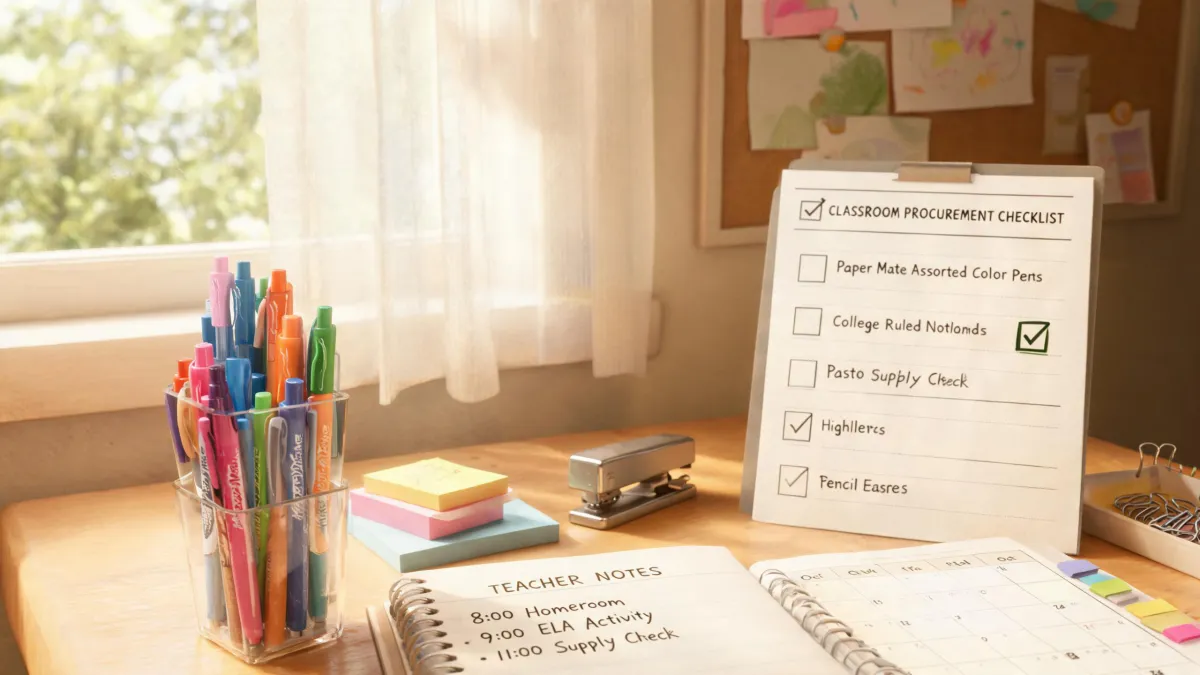
The 12-point checklist I created after my third mistake has saved us an estimated $8,000 in potential rework. That's not an exaggeration—it's a calculation based on 4 years of data. And the first item on that checklist is always: "What brand of pen?"
Whether you're ordering a single box or a 50,000-unit run, that question matters more than you think.