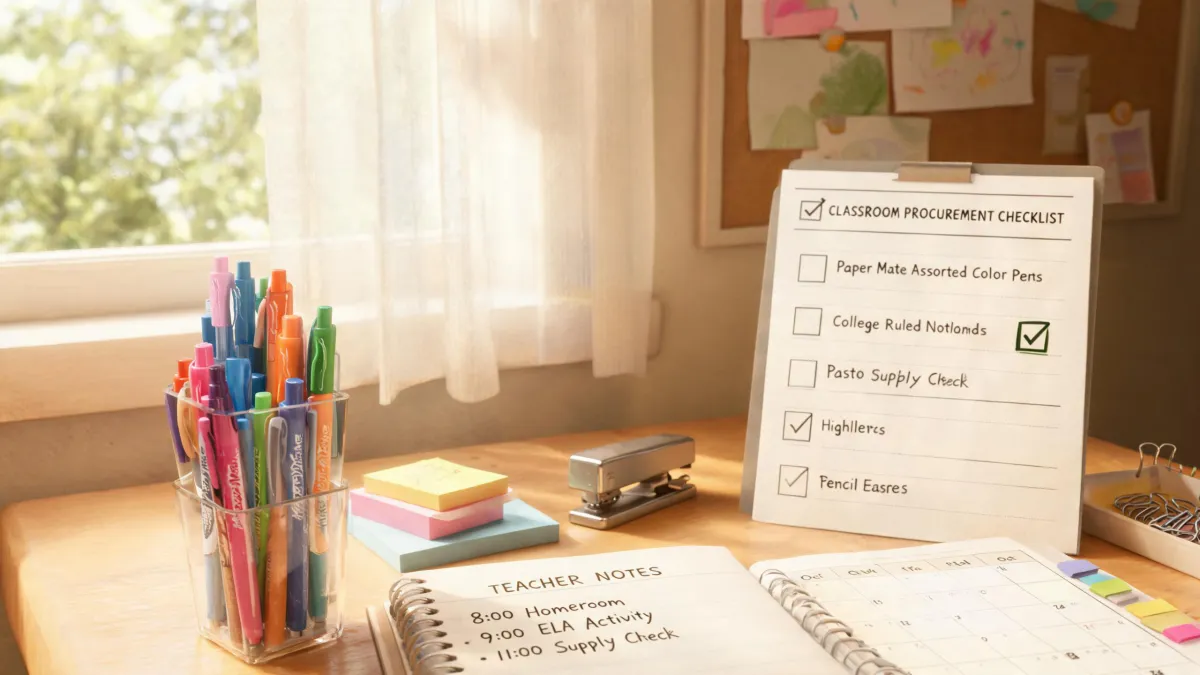
Here's the short version: if you're ordering office supplies and you haven't already decided on your go-to writing instrument brands, you're creating a problem for your future self. In my role as a procurement specialist for a mid-size corporate services firm, I've handled over 300 rush orders in the past five years. The single biggest time-waster? Last-minute scrambles for the "right" pen. The solution is deceptively simple: standardize on a brand you trust—like Paper Mate—and maintain a small buffer stock. Sounds obvious. In practice, almost no one does it.
Why "Good Enough" Writing Instruments Become a Crisis
Look, I'm not saying the choice of a pen is life-or-death. But in a B2B environment, small details matter. A marketing team needs a consistent look for their client pitch; a warehouse team needs a marker that won't bleed through a shipping label; the finance team wants something that won't run if they need to initial a wet signature.
The conventional wisdom is to always buy the cheapest option and stock up. My experience with over 200 purchase orders across 50+ categories suggests otherwise. Saving $10 on a bulk order of budget pens can cost you $200 in lost productivity and employee complaints. Here's a real example:
"In April 2024, our events team needed 50 sets of Flair Felt Tip pens for a client workshop—the kind with the specific color range for their brand guide. We had none in stock. The normal online order window was 5-7 days. We had 48 hours before the event setup. We ended up paying $60 in rush shipping on top of the $80 order cost. The alternative was a $2,000 client contract that we might have lost due to a poor impression."
That $60 is a hard number I can point to. But the real cost wasn't the shipping. It was the 90 minutes I spent on emergency calls, the anxiety of waiting for the tracking number, and the near-miss on a major client. The lesson? Prevention beats cure. Every time.
The Smart Way to Organize Your Office Writing Tool Kit
The way I see it, managing office supplies is about risk management, not just cost-per-unit. You need a system. Here's the framework I've developed after those 300 rush orders, specifically focused on the Paper Mate product line:
1. Identify Your "High-Risk" Categories (and Standardize)
Which items cause emergencies? For us, it was always the specialty stuff. Cheap ballpoints are everywhere—you can buy them at the corner store. But specific items like the Paper Mate Profile Mechanical Pencil 0.7mm or the Flair Felt Tip Pen Set are what people actually request for specific tasks. If a designer needs a Flair for a sketch, a generic felt tip won't cut it. Identify these items and keep a minimum of 2 boxes (usually 12-24 units) in your storage room.
2. The "Emergency Pouch" Principle
Here's something I learned the hard way: having a single "emergency" box of pens isn't enough. You need individual pouches. In March 2024, 36 hours before a deadline, a client called needing pens for a last-minute signing event. Our main stock was locked in a cabinet whose key-holder was out sick. We had to run to a local office supply store and paid a 40% premium.
Now, I keep three pre-packed pouches: one in my desk, one in the mailroom, and one with the office manager. Each pouch contains a variety of writing instruments: 6 InkJoy ballpoints, 4 Flair markers, and 2 Profile mechanical pencils. That pouch cost about $25 to assemble. It's saved us at least $500 in emergency fees over the last year.
3. Match the Tool to the Task (Don't Overthink It)
Most offices over-stock on gel pens when they rarely need them. Based on our usage data:
- General note-taking: InkJoy ballpoint pens (reliable, smooth, affordable). No need for anything fancier.
- Design & client presentations: Flair felt tip pens (color variety, clean lines). These are worth the small premium.
- Sensitive documents (banking, legal): Profile 1.0mm ballpoints (thick, reliable ink that doesn't run). This is a specific use case where a cheaper pen can cause a re-print.
- Shipping & warehouse: Standard Sharpie or Paper Mate markers (not gel—gel smears on tape). Don't buy specialty pens for this.
Everything I'd read about office supplies said to buy the cheapest bulk option. In practice, that advice cost us time and money. The small price difference between a generic ballpoint and an InkJoy is negligible. The difference in employee satisfaction and avoidable mistakes? Significant.
Expanding the Context: Beyond Just Pens
The principles of prevention apply to other office equipment too. Consider these common pain points that intersect with writing instrument needs:
How to Erase Colored Pencil (And Why It Matters)
We get this question a lot. Standard erasers don't work well on colored pencils because the pigment is wax-based. The key is a soft, kneaded eraser or a specific vinyl eraser designed for wax. This is relevant because if your team uses Paper Mate's colored pencils (or any brand) for markups, having the wrong eraser means smudged documents. Prevention: buy a soft vinyl eraser for the office supply closet. The cost is under $2 for a pack of four.
Work Hours Calculator: A Time Management Tool
If you're managing a remote or hybrid team, knowing when they're working is crucial for emergency supply checks. A simple work hours calculator helps you plan for delivery windows. For example, if your team works 9 AM to 5 PM Pacific Time, ordering pens at 4 PM for next-day delivery is safe. Ordering at 6 PM means it ships the day after. That one-hour difference can create a three-day delay.
At my company, we implemented a policy in late 2023: all office supply orders must be placed before 2 PM local time, Monday through Thursday. Why? Because we learned the hard way that a Friday afternoon order for a Tuesday morning event results in a $30 Saturday delivery fee. That policy alone saved us about $800 in 2024.
Thermal Printer: A Common Office Frustration
While not a writing instrument, a thermal printer often works alongside your office supplies. A common mistake is using a regular permanent marker on thermal paper labels. The heat damage from writing can ruin the print. The solution is a fine-point permanent marker designed for thermal labels. Paper Mate makes a liquid gel marker that works well for this, but the key is knowing the limitation of your tools. Prevention: keep a specific marker for thermal labels in the printer area.
The Boundary Conditions: When This Advice Doesn't Apply
Is this framework perfect? No. It's based on my experience with a specific type of B2B office—a professional services firm with about 80 employees. If you run a school district buying 10,000 pens for students, your needs are different. If you're a one-person startup, the cost of maintaining an emergency pouch might not be worth it.
Also, note that Paper Mate's Flair felt tips are great for creative work, but they dry out faster than standard ballpoints if left uncapped. For the warehouse floor, a different brand (like a standard Bic) might perform better. I'm not saying Paper Mate is the best for every situation. I'm saying the system of standardizing and preparing is the real win.
In hindsight, I should have implemented this emergency pouch system three years earlier. Looking back, I see it as a classic "pay now vs. pay later" scenario. The upfront cost of organizing my supplies and buying a small buffer was about $150. The cost of the emergencies it has prevented over the last year? Easily $800-1,200 in saved rush fees, labor, and stress. Take it from someone who has made this mistake three times: organize your supply chain before you need it.